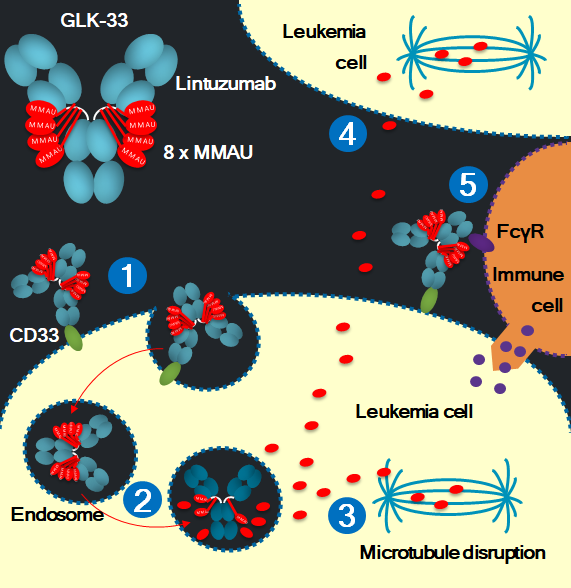
GLK-33 is an ADC consisting of humanized anti-CD33 antibody lintuzumab and eight MMAU auristatin payloads per antibody. The antibody binds to the CD33 receptor on the surface of leukemia cells, liberates the cytotoxic drug, and causes cell death and immunologic reaction against cancer.
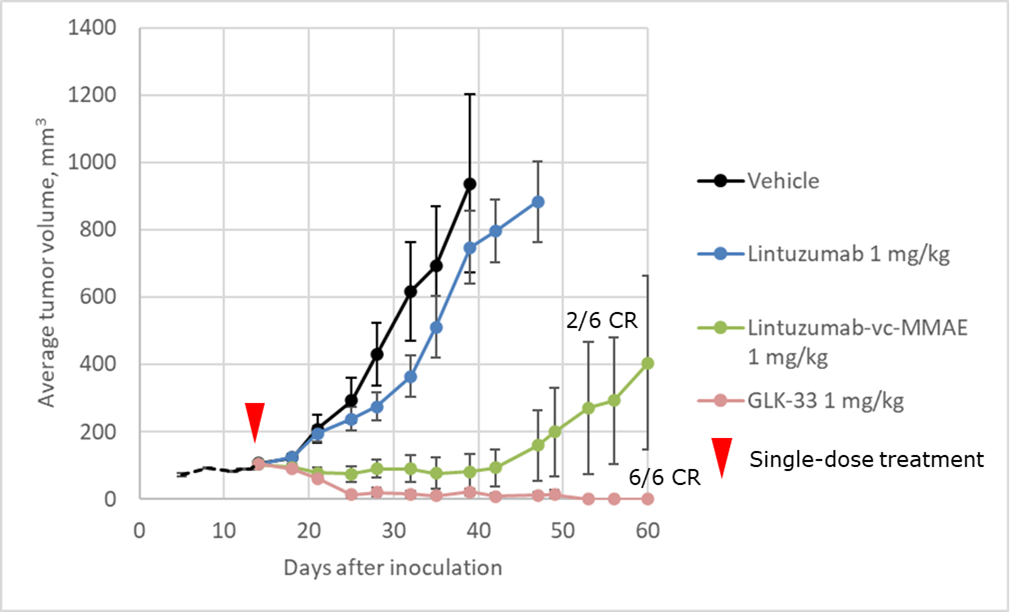
GLK-33 has high anti-cancer efficacy. In preclinical leukemia models, GLK-33 was effective against AML at single doses down to 100 μg/kg. GLK-33 had 3-fold better efficacy than corresponding MMAE auristatin ADC against AML in xenografted mice. The hydrophilic linkers joining the antibody and drug have excellent systemic stability, leading to improved tolerability and safety. In preclinical rat toxicology, GLK-33 was better tolerated than either gemtuzumab ozogamicin (currently marketed AML ADC) or MMAE auristatin ADC. High efficacy and safety combine to produce an exceptionally wide therapeutic window for GLK-33.
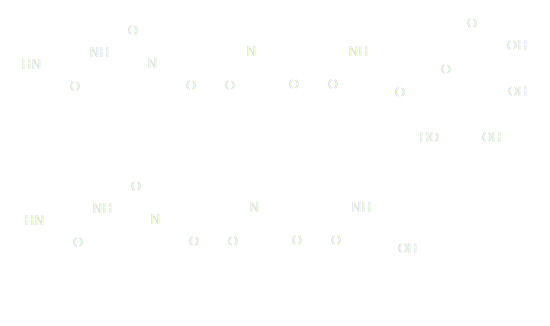
Auristatins are the most widely used payload class in ADCs. They are potent microtubule disrupting agents that preferentially target cancer cells and act synergistically with other cancer drugs including immunotherapeutics. Glykos’ novel auristatin MMAU is a glucuronide modification of the standard auristatin MMAE that is currently being used in the marketed ADCs Brentuximab Vedotin (Adcetris®), Enfortumab Vedotin (Padcev®), and Polatuzumab Vedotin (Polivy®). Glykos’ linker-payload technology widens the therapeutic window of MMAU ADCs compared to MMAE ADCs by improving ADC pharmacokinetics, stability, and efficacy.